
Hisense UR9 Review: Advancing RGB Mini LED Technology
The Hisense UR9 is a groundbreaking TV featuring advanced RGB Mini LED technology, offering impressive brightness and sound at a competitive price point.
Introduction to the Hisense UR9
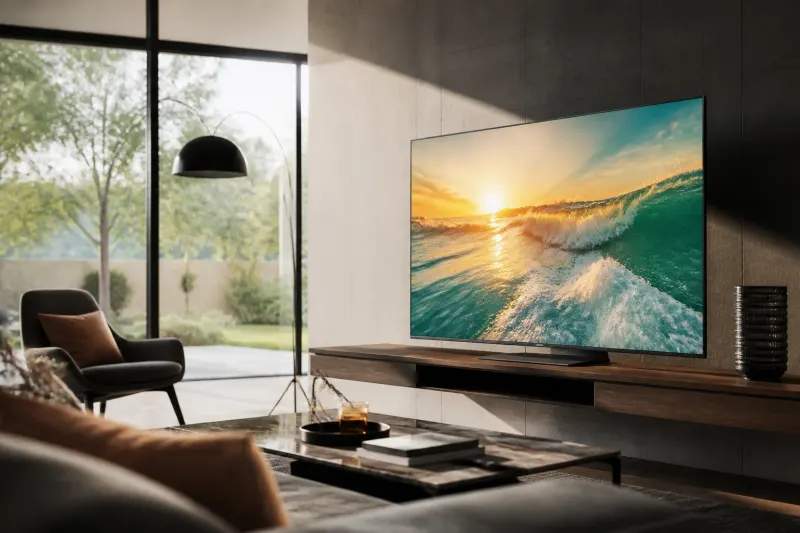
The Hisense UR9 represents a significant leap in television technology, notably pushing the boundaries of RGB Mini LED performance. This 65-inch television aims to compete directly with premium OLED TVs, promising exceptional brightness and color accuracy while showcasing advanced backlight control. Released in April 2026 at a competitive price point, the UR9 is attracting attention for its innovative features and impressive specs, designed to meet the evolving needs of viewers and gamers alike.
Hisense UR9 Specifications
| Feature | Details |
|---|---|
| Screen Size | 65", 75", 85", 100" |
| Peak Brightness | 3,500 nits |
| Local Dimming Zones | 980 |
| Refresh Rate | Native 180Hz |
| Audio System | 4.1.2 channel, 80 W |
| Operating System | Google TV |
| Connectivity | 3 x HDMI 2.1, USB-C, USB, Optical Digital Audio Out |
Design and Build Quality
The Hisense UR9 boasts a clean and practical design that prioritizes functionality over luxury. Framed by slim bezels, the dark metallic finish enhances its modern look. Despite being thicker than many top-tier OLED televisions, measuring around 4.5 centimeters, its design remains visually appealing. The centrally mounted pedestal stand not only provides stability but also allows for height adjustments, making it easier to accommodate soundbar setups. Overall, the UR9 looks robust and well-constructed, although a more premium finish might have been desirable given its price point.
Display Performance of the UR9
At the heart of the Hisense UR9 is its RGB Mini LED display technology. Unlike traditional Mini LED TVs that rely on white LED backlighting, the UR9 utilizes individual red, green, and blue Mini LEDs for enhanced accuracy in color reproduction. With a peak brightness of 3,500 nits and an impressive 980 local dimming zones, the UR9 stands out for its capacity to produce vivid, saturated colors and remarkably deep black levels.
Testing the display's performance reveals notable strengths, especially in its ability to manage backlight control with minimal blooming. In scenes from films like 1917, the clarity of white text on dark backgrounds demonstrated the television's effective handling of contrast, while blacks remained deep and rich. Viewers can expect an overall stable picture, even when navigating through varied lighting conditions, which is a common challenge in many Mini LED models.
Color Accuracy and HDR Performance
When it comes to high dynamic range (HDR) content, the UR9 excels. It delivers intense colors and impressive highlight detail, contributing to a cinematic viewing experience. Testing with films like Blade Runner 2049 showed that shadow detail is well-managed and colors, particularly reds, appear both vibrant and true-to-life. Bright scenes display a cinematic quality without excessive processing artifacts, enhancing the viewing experience.
Comparison with OLED
Although the UR9 accomplishes much in terms of display quality, it still falls short of the absolute contrast levels offered by OLED technology. Individual control over OLED pixels creates perfect blacks and allows more dimensional depth in visuals that RGB Mini LED cannot fully replicate. In high-contrast scenes, such as the starfield in Alien: Romulus, some halo effects around bright objects remain visible, indicating that OLED still holds a distinct advantage in specific viewing scenarios.
Audio Performance with Devialet
The sound system integrated into the Hisense UR9 is a collaboration with the audio firm Devialet. This 4.1.2-channel setup, combined with Dolby Atmos support, provides a surprisingly immersive audio experience for a television. Utilizing up-firing speakers, the audio system creates a sense of space that extends beyond the screen, enhancing the enjoyment of content.
While the bass response is satisfactory and clarity is maintained at higher volumes, there are still areas where the audio could improve. Action scenes sometimes lack the needed punch, and dialogue may occasionally sound distant or muffled in Theatre Mode. However, the built-in speakers outperform many competing models, making them a solid option for less demanding viewers. For optimal home theater setups, the inclusion of an external soundbar is recommended for an enhanced audio experience.
Smart Features and Gaming Capabilities
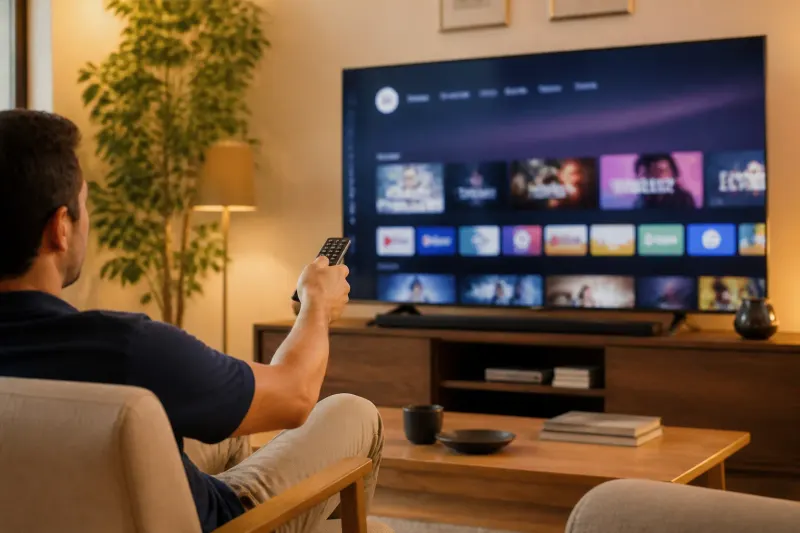
The Hisense UR9 operates on the Google TV platform, granting access to popular streaming services such as Netflix, Disney Plus, and Prime Video. The interface is user-friendly, allowing for easy navigation through apps and personalized recommendations based on viewing habits. Features like Google Assistant voice capabilities further enhance the smart TV experience, providing additional functionality.
Gaming enthusiasts will find the UR9 particularly appealing due to its native 180Hz refresh rate and support for Variable Refresh Rate (VRR) and Auto Low Latency Mode (ALLM). With three HDMI 2.1 ports and a unique DisplayPort connection, the television caters to both console and PC gamers, allowing for high-refresh-rate gaming. Despite some drawbacks in input lag, measured at around 32.5 milliseconds, the UR9 still performs adequately for casual gaming and 4K gaming setups.
Pricing and Market Positioning
Pricing significantly influences the UR9's appeal in a competitive market space. Originally projected to retail for approximately $3,500, the Hisense UR9's price has effectively dropped to around $1,999 for the 65-inch model upon release. Additional discounts have seen prices plummet to around $1,700 at select retailers, further enhancing its value proposition.
With a pricing structure that includes:
- 65-inch: $1,999
- 75-inch: $2,999
- 85-inch: $3,999
- 100-inch: Initially announced at $8,999
this television positions itself favorably against competitors like LG and Sony OLEDs while offering cutting-edge display technology without the premium price tag traditionally associated with OLED models. The combination of RGB Mini LED technology, impressive brightness, and a robust feature set makes the UR9 a worthy contender in the premium TV landscape.
Conclusion and Recommendations
The Hisense UR9 stands as a testament to how far RGB Mini LED technology has progressed. With outstanding performance in managing backlight and delivering bright, vibrant visuals, it makes a compelling case for consumers seeking alternatives to OLED without sacrificing quality. However, OLED remains the go-to choice for those who prioritize perfect blacks and viewing angles.
For viewers attracted to the advantages of RGB Mini LED, the UR9 is not only an exciting option but also a well-rounded television that caters to both casual viewers and gamers alike. For those considering products in the premium category, exploring competitors such as the LG C6 OLED and Samsung QN80H Mini LED may also provide suitable alternatives based on individual preferences and viewing priorities.
Key Takeaways
- The Hisense UR9 features peak brightness of 3,500 nits and uses RGB Mini LED technology for better color and contrast.
- It includes a 4.1.2-channel audio system tuned by Devialet, offering immersive sound with Dolby Atmos support.
- Designed for gaming, it boasts a native 180Hz refresh rate and includes support for advanced gaming features.
- With a price cut to around $1,999, the UR9 becomes a competitive option against OLED models.
- While it excels in many areas, OLED technology still holds advantages in contrast and viewing angles.
Frequently Asked Questions