
Millennial METI Initiatives: Expanding Cosmic Communication
Discover the fascinating evolution of Messaging Extraterrestrial Intelligence (METI) and key initiatives that have reached out to the cosmos in the last two decades.
Introduction to Millennial METI
As human curiosity about the cosmos continues to expand, the field of Messaging Extraterrestrial Intelligence (METI) has evolved significantly over the years. Since the Arecibo Message marked humanity's first greeting to the stars, METI experiments have gained traction, especially with the advent of advanced space exploration technologies and renewed interests following pivotal missions to Mars and beyond. This article will delve into notable METI initiatives launched since the dawn of the new millennium.
Background: The Evolving Landscape of METI
The evolution of METI is closely linked to advancements in space exploration technology. Following the iconic Hubble Space Telescope and deep space missions such as Galileo and Cassini-Huygens, the need for a more structured approach to communicate with potential extraterrestrial civilizations emerged. Recognizing this, radio astronomers and scientists sought to enhance the methods through which humanity could send messages into the cosmos, drawing inspiration from prior successes in space communication.
Message to Altair
In 1983, the Message to Altair was sent by astronomers Masaaki Morimoto and Hisashi Hirabayashi using the Stanford Dish radio telescope. This ambitious communication targeted Altair, a star located approximately 16.7 light-years from Earth, and aimed to transcend mere scientific data to convey a cultural message. Each page of the transmitted message addressed essential subjects, arranged in a way that builds an understanding of Earth’s life forms.
Content Breakdown of the Message
The Message to Altair consisted of several pages detailing:
- Mathematical Concepts: Numbers 1 to 12, prime numbers, and essential chemical elements necessary for life were included.
- Solar System Information: A structured representation of the Solar System, detailing the Sun and planets' order, moons, and distances.
- Diversity of Life: A visual representation showcasing the evolution of life on Earth, from simple organisms to humans, concluded with a personal touch that depicted a family raising a toast.
This message not only aimed to share knowledge about humanity but also invited a cultural exchange with potential extraterrestrial recipients.
The Cosmic Calls: Engaging with the Cosmos
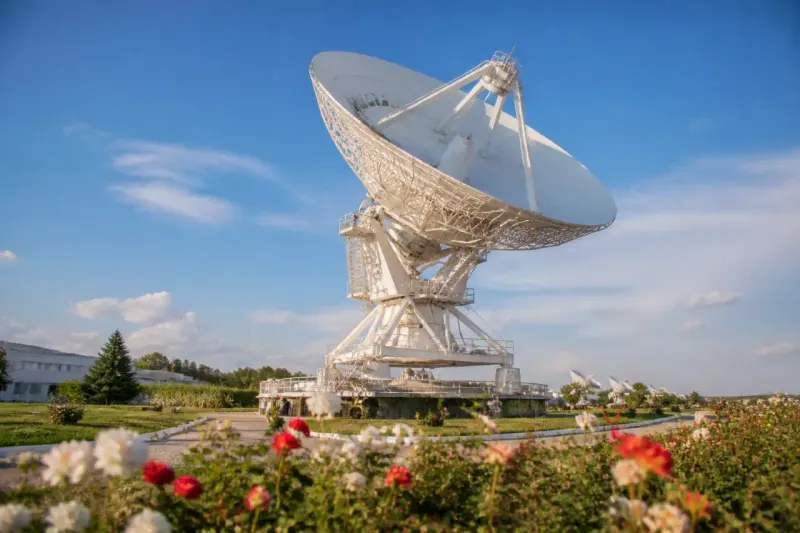
Between 1999 and 2003, a series of METI initiatives known as the Cosmic Calls utilized the Evpatoria Planetary Radar in Crimea, a facility with rich capabilities for deep-space communications. Under the leadership of scientist Alexander Zaitsev, these projects marked a significant public outreach in METI efforts.
First Cosmic Call (1999)
The inaugural Cosmic Call featured two broadcasts, the first targeting several Sun-like stars over the summer months of 1999. The message itself was structured using Lincos principles, aimed at being universally comprehensible, with contributions from various scientists:
- Destinations: 16 Cygni A, 15 Sagittae, and HD 178428.
- Transmission Details: Each session consisted of a combination of structured messages that included scientific data followed by a public part intended for a broader audience.
- Session Length: Totaling 40 hours across various frequencies, each scientific message segment was sent multiple times to ensure clarity.
Second Cosmic Call (2003)
The second Cosmic Call followed a similar format but refined the structural elements based on feedback from the first attempt. It included:
- Updated Message Structure: The second message introduced an enhanced version of the earlier message structure along with updated pictographs.
- Expanded Target List: This effort broadened its horizons by targeting five more stars, including GJ 49 and 55 Cancri, known for their G and M-type stars.

Table: Cosmic Calls Overview
| Cosmic Call | Year | Target Stars | Transmission Frequency |
|---|---|---|---|
| Cosmic Call 1 | 1999 | 16 Cygni A, 15 Sagittae, HD 178428 | 100 - 2000 bits/sec |
| Cosmic Call 2 | 2003 | GJ 49, Gliese 208, 55 Cancri, HD 10307, 47 Ursae Majoris | 100 - 2000 bits/sec |
The Impact of Public Involvement in METI
These Cosmic Call experiments represented one of the earliest major initiatives involving public participation in METI efforts. The messages were compiled not just through professional scientists but also with contributions from the public, thus democratizing the concept of sending messages to the stars.
Continuing the Legacy of METI
As METI becomes more mainstream, its approach has diversified. Following the closure of Team Encounter, METI International was established, paving a path for future collaborations and ongoing public engagement with METI projects. This development signifies a shift toward more structured and organized METI efforts that blend artistic expression with scientific rigor.
Future Prospects for Interstellar Messaging
Looking forward, efforts are ongoing to refine the techniques used to send messages, with new technologies and research emerging. The exploration of advanced mathematical languages and multi-media formats presents an exciting frontier for METI initiatives, expanding the possibilities for meaningful contact with potential extraterrestrial civilizations.
Key Takeaways
- The Message to Altair was sent in 1983, marking a cultural outreach to potential extraterrestrial intelligence.
- Cosmic Calls represent public involvement in METI, with experiments conducted between 1999 and 2003.
- Cosmic Call 1 targeted key stars, transmitting messages at rates ranging from 100 to 2000 bits per second.
- Future METI efforts seek to enhance communication techniques and broaden public participation.
Conclusion
The journey of METI is continuously evolving, with implications for both scientific research and cultural exchange. As humanity reaches deeper into space and expands its reach, the potential for contact with extraterrestrial intelligence remains a tantalizing prospect. The ongoing dialogue in METI not only reflects humanity’s curiosity but also its desire to foster understanding beyond the stars.
Frequently Asked Questions