
Military and Civil Satellites Enhance Planetary Defense Against Fireballs
This article discusses how military and civil satellites monitor fireballs to enhance planetary defense and respond effectively to cosmic threats.
Introduction to Planetary Defense
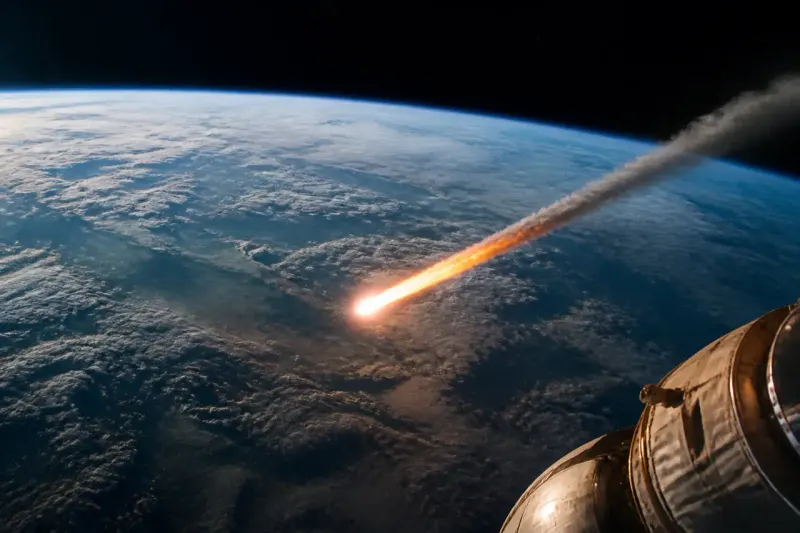
As Earth continues to navigate its orbit, it faces periodic threats from space rocks, often referred to as bolides when entering the atmosphere. The importance of monitoring these objects has grown, leading to the collaborative use of military and civilian satellite systems. These advanced technologies work together to track and analyze fireballs, thereby enhancing planetary defense strategies.
Recent Fireball Events Highlight the Need for Monitoring
Case studies of recent fireball incidents illustrate the effectiveness of satellite monitoring and the necessity of integrating various detection systems. One notable event occurred on April 1, 2026, when a blinding fireball zipped across the South Atlantic, detected by multiple U.S. military and civilian sensors. Peaking at around 60 miles (90.5 kilometers
Significant Fireball Events
| Date | Location | Size | Energy Equivalent |
|---|---|---|---|
| April 1, 2026 | South Atlantic | N/A | N/A |
| April 24, 2025 | South-Central Alaska | Varies | N/A |
| May 20, 2023 | Northwest Queensland, Australia | 12 feet (3.7 meters) | 7.1-kiloton explosion |
Another vital incident occurred on April 24, 2025, as a fireball flew over south-central Alaska. This event was noteworthy due to the extensive recording of seismic and infrasound data across a network of sensors, providing a detailed account of the object's trajectory and fragmentation.
Finally, in May 2023, a fireball about 12 feet wide (3.7 meters) boomed across the skies of Queensland. The U.S. government monitored this space rock, which fragmented dramatically, resulting in one of the most energetic meteor impacts recorded, equivalent to the force of a 7.1-kiloton bomb.
The Role of Sensor Technology
The ability to monitor and analyze fireballs relies heavily on various sensor technologies. Civilian satellites, such as those from NOAA and the European Space Agency (ESA), play a critical role in detecting atmospherically entering objects. For instance, the Meteosat Third Generation's Lightning Imager introduced capabilities that allow for the detection of bolides amidst meteorological phenomena, enhancing weather forecasting and planetary defense simultaneously.
Combining Civilian and Military Data
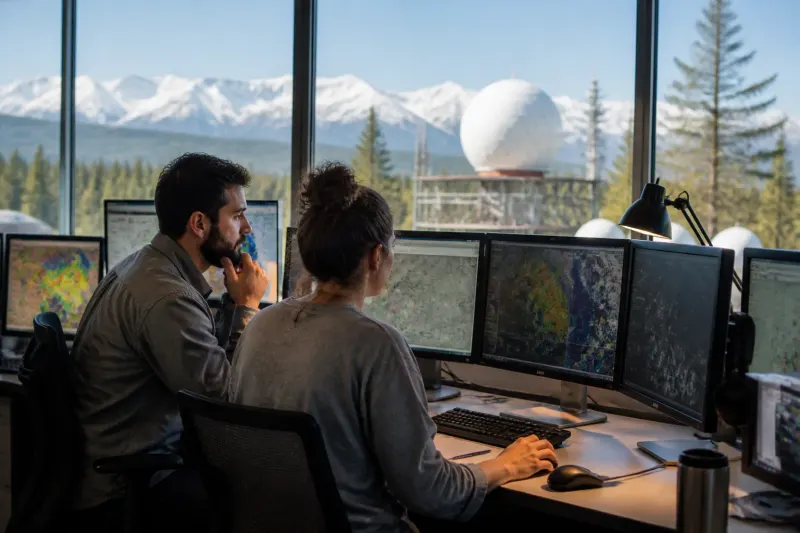
The data collected from military and civilian sources are typically complementary. As explained by Elizabeth Silber, a senior physicist at Sandia National Laboratories, the information gathered through different sets of sensors enables scientists to refine their understanding of event dynamics. While the U.S. government provides initial detection through NASA's Center for Near-Earth Object Studies (CNEOS), civilian sensors can enhance the details through additional measurements.
Insights from the Alaska Event
The Alaska fireball incident serves as a prime example of this collaborative data gathering. While U.S. government sensors missed this specific event, civil and scientific observations successfully reconstructed it using data from multiple sources, such as seismic, optical, and weather radar data. This demonstrates how various observational methods can yield comprehensive information even in cases where one data source fails.
Validation of Detection Methods
Silber emphasized that combining data from different sensors allows for a better understanding of atmospheric entry events. The collaboration means researchers can ascertain crucial details regarding fragmentation, energy release, and potential material survivability during reentry.
Understanding the Broader Implications
The implications of enhanced monitoring extend beyond scientific exploration and natural phenomena. Planetary defense is vital for preventing misinterpretation of natural fireballs as potential military threats. Specialists like Rob Landis from NASA highlight the risks involved; an unrecognized bolide could mislead nations into mistakenly perceiving a natural event as a preemptive strike. This emphasizes the importance of accurate detection and verification systems.
Real-World Applications of Research
Continuous improvements in fireball observation techniques can directly benefit planetary defense initiatives. These events provide invaluable real-world tests that help refine detection methods and models used to predict future occurrences. A deeper understanding of how various materials behave upon entry can improve societal response strategies and protocols.
Key Takeaways
- Multiple satellite systems, including military and civilian, track fireballs in real time.
- Unique fireball events in 2025 and 2026 enhance observational understandings.
- Data from different sensors provide complementary viewpoints to validate observations.
- Accurate monitoring can prevent misunderstandings that might lead to conflict.
- Ongoing research helps improve future planetary defense strategies.
Conclusion: Looking Ahead in Planetary Defense
By employing a diverse range of monitoring systems, scientists and defense specialists can analyze fireball events more effectively. This cooperative approach not only enhances our understanding of natural atmospheric entries but also strengthens our planetary defense mechanisms against potential cosmic threats. As technology continues to evolve, the integration of diverse data sources will play an increasingly vital role in ensuring Earth's safety from the hazards above.
Frequently Asked Questions