
San Francisco's AI Boom Sparks Local Growth and Economic Concerns
San Francisco is undergoing a revitalization driven by the AI sector, but concerns about a potential market correction raise questions about the future.
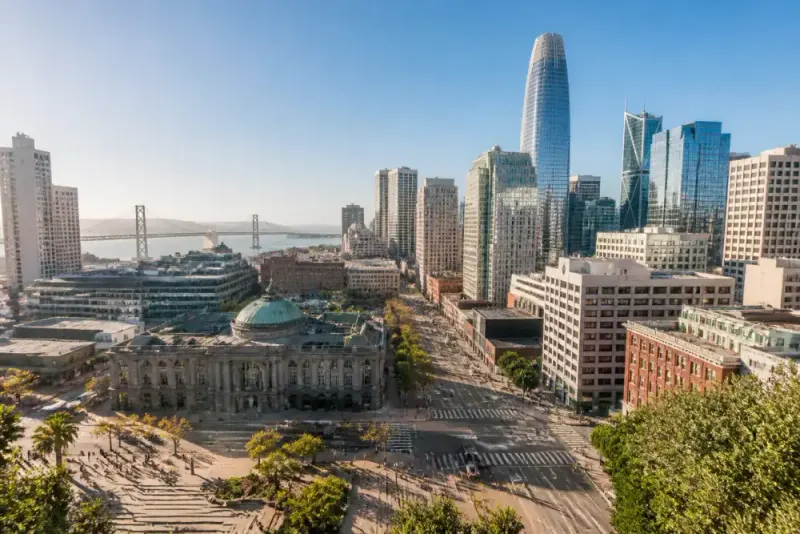
San Francisco's Resurgence in the AI Sector
San Francisco is experiencing a significant resurgence driven by the AI sector, with companies like OpenAI and Anthropic leading the charge. This renewal comes after a challenging period during the pandemic when many residents left the city, leaving its downtown subdued. Today, the proximity to AI startups and their bustling activities has rejuvenated not just tech firms but also local businesses.
One such business is Paw Perk, owned by dog-walking entrepreneur Lauren Goldboss. She has rapidly expanded her services thanks to increased demand from new staff at these AI companies, highlighting the ripple effects of the tech boom on ancillary businesses.
Impacts of the AI Boom
The economic indicators of the AI boom are evident in San Francisco. There has been a noticeable increase in rental prices and housing costs, with office vacancies declining as demand surges. Billboards and bus advertisements related to AI have become commonplace, creating a bustling urban atmosphere around the tech sector.
Interestingly, the financial ecosystem surrounding AI is robust, with Anthropic recently listing on the Nasdaq. The gross billings for AI firms have skyrocketed, with Nvidia reporting an astounding $65 billion in quarterly profits, positioning itself as a staple in the industry despite recent controversies surrounding its former chief, Jensen Huang.
Concerns About a Market Correction
However, the boom has not come without its share of concerns. Speculation over a potential downturn has prompted discussions among industry veterans and workers alike. An AI engineer working for a major firm in San Francisco articulated common fears regarding sustainability. He expressed doubts about whether the revenue generation capabilities of leading AI companies will match their ongoing operational expenditures amid increasing competition, particularly from cheaper, less resource-intensive models emerging notably from China.
Another anonymous AI professional articulated a similar sentiment, emphasizing that market fluctuations may not represent the existential threats posed by AI to humanity. This contrasting perspective prioritizes broader societal implications over financial concerns, reflecting a shift in focus among some within the tech community. "In some weird way, a market correction being the worst-case outcome feels great," he noted.
Geographic Concentration of AI Investments
The concentration of AI investment in San Francisco specifically is noteworthy. From 2023 to 2025, a striking 60% of all US venture capital directed towards AI startups was funneled into companies within the city. This illustrates the distinctive business environment San Francisco offers, marking it as the primary hub for AI development, compared to Silicon Valley, located 40 miles to the south, which has traditionally enjoyed this status.
Housing Market and Employment Challenges
Despite this economic vigor, experts caution that the impact of a possible market correction may not align with past tech downturns. Jeff Bellisario, executive director of the Bay Area Council Economic Institute, observed that AI companies are hiring less vigorously than anticipated given the influx of venture capital. "Hiring isn't necessarily on the scale we would have thought with the amount of venture capital and new company formation," Bellisario stated.
The city still trails by approximately 35,000 jobs in tech compared to pre-pandemic levels, as reported by Enrico Moretti, an economics professor at the University of California, Berkeley. Most expenditures by AI companies are currently associated with infrastructure, such as data centers and computing power, rather than significant job creation within the urban metropolis.
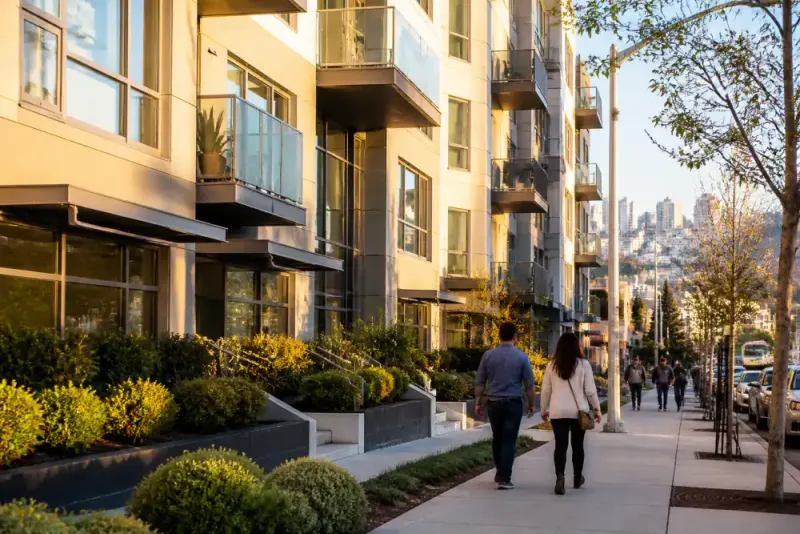
Potential Ripple Effects of a Downturn
If a downturn does manifest, experts predict that San Francisco could bear a heavier burden than Silicon Valley. The interconnectedness of local service sectors means that a decline in AI job numbers could lead to a direct downturn in service roles, affecting everything from restaurants to personal services like Goldboss's dog-walking enterprise. The ultimate consequences could see increased office vacancies, decreased foot traffic downtown, and a softening of real estate prices.
Moretti warns that while AI innovation is currently thriving, the connections between service industry jobs and tech employment could mean hard times for many. "It is the spillover on service jobs that would actually be the main effect," he asserted.
Broader Economic Influences
San Francisco's recovery isn't solely reliant on AI transformations. The healthcare and tourism sectors have also played roles in boosting the local economy. Improvements in downtown safety and cleanliness have fostered a resurgence in tourism, which, while not fully back to pre-pandemic levels, reflects an upward trajectory. Ted Egan, the chief economist for the City and County of San Francisco, notes, "Tourism is not fully back, but the growth has been healthy," suggesting that confidence in the city is returning.
Looking Ahead: Preparing for Possible Changes
Future predictions are mixed among experts. Egan notes that he does not expect any drastic changes to the city’s economic outlook, even in the event of an AI downturn. "The city's economy has not been screaming during this AI boom, so I wouldn't expect it to grind to a halt if there was a slowdown in AI spending," he explained. Egan envisions a minor impact rather than a catastrophic collapse, describing it as more of a "hiccup." While the city’s government cannot control these market forces, its potential to encourage growth in sectors outside technology and to maintain financial reserves may help cushion any downturn effects. For entrepreneurs like Goldboss, the philosophy lies in capitalizing on the current upswing. She acknowledges that the possibility of a tech bust is part of the reality in San Francisco. "It is just the risk you kind of have to take," she concluded, indicating a resilient mindset focused on adaptation amid uncertainty.
Frequently Asked Questions